Inside UK Clothing Manufacturing: From Lingerie to Knitwear, Shirts and Ready-to-Wear

- Bernice
- October 8, 2026
- clothing manufacturers, Fashion Business, UK Fashion Industry
When we think about British fashion, we often think about the finished product: beautifully tailored coats, luxury knitwear, perfectly cut shirts, delicate lingerie and independent designer collections.
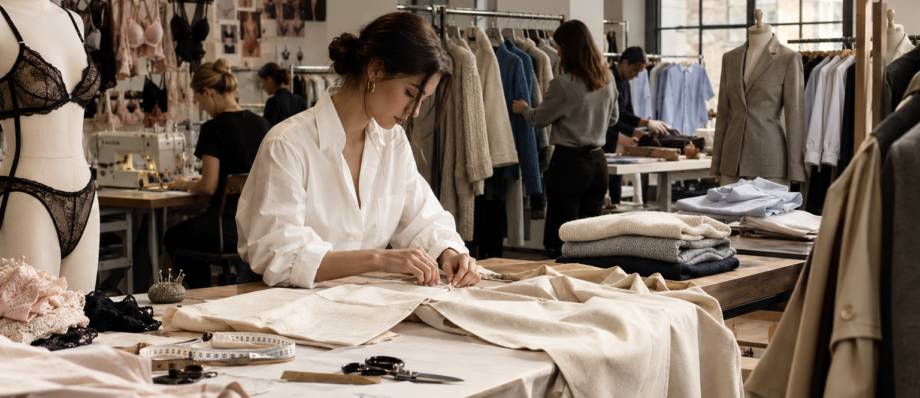
But behind every garment is a very different world – one of specialist factories, sampling studios, skilled machinists, pattern cutters, technicians and manufacturers, each with their own expertise.
While a huge proportion of clothing sold in the UK is manufactured overseas, British clothing manufacturing is still very much alive. In fact, the UK continues to have a specialist manufacturing base, particularly suited to smaller production runs, premium garments, heritage techniques, sampling and products that require a high level of technical skill. Recent UK data estimates around 20,000 apparel manufacturing jobs in Great Britain, alongside a much larger textile manufacturing sector.
One of the most interesting things about UK manufacturing is that there isn’t really one type of “clothing factory”. Different garments require completely different machinery, skills and production processes.
So, what actually gets made in UK factories and studios?
Lingerie Manufacturing
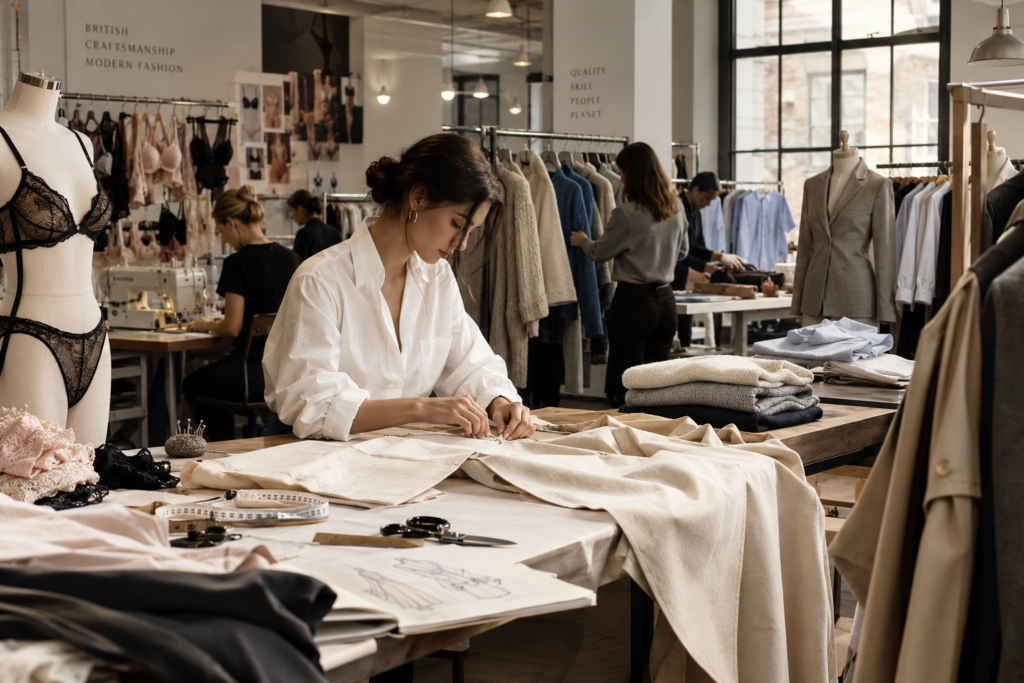
Lingerie is one of the most technically demanding areas of clothing production.
Unlike a simple T-shirt, a bra or structured lingerie piece can contain numerous components: delicate fabrics, elastics, lace, hooks and eyes, underwires, sliders, straps and specialist trims. The garment also needs to fit the body precisely.
For this reason, lingerie production often takes place in specialist studios or factories with experience in intimate apparel rather than a general garment factory.
UK lingerie manufacturers and development studios can work on everything from bras and briefs to corsetry, shapewear, slips and more specialised intimate garments. Some offer sampling and pattern cutting before moving into small-scale production, which can be particularly useful for emerging lingerie brands.
The development stage is especially important. A lingerie pattern can require multiple fittings and adjustments before the final sample is approved.
It’s a perfect example of why “Made in the UK” can sometimes mean much more than simply sewing a garment here – it can involve highly specialised technical knowledge.
Knitwear Manufacturing
Knitwear is another area where the UK has a particularly strong manufacturing heritage.
And knitwear is fundamentally different from cut-and-sew clothing.
With a woven shirt or dress, fabric is generally produced first and then cut into pattern pieces. Knitwear can instead be created by knitting yarn directly into panels or, depending on the machinery and construction, into shaped components.
UK knitwear production is particularly associated with Scotland and the north of England, where generations of expertise have developed around wool, cashmere and other natural fibres.
Factories and specialist knitwear producers can manufacture everything from fine-gauge luxury jumpers and cardigans to chunky knitwear, scarves and accessories. Some producers operate on a fully factored basis, meaning the manufacturer may also source or supply the yarn rather than simply receiving fabric from the brand.
This is one of the areas where choosing the right manufacturer really matters. A factory specialising in lightweight cashmere knitwear may be completely unsuitable for producing a structured woven jacket – even though both businesses might describe themselves simply as “clothing manufacturers”.
Shirts and Woven Garments
Shirt manufacturing is another specialist area.
A classic shirt can look deceptively simple, but there are numerous technical details involved: collars, cuffs, plackets, buttonholes, yokes, sleeve construction and precise topstitching.
Factories producing shirts need the machinery and expertise to handle these details consistently across potentially hundreds or thousands of garments.
The same category of manufacturing can extend into blouses, dresses, skirts, trousers and other woven garments.
Many UK factories operate using a model known as CMT — Cut, Make and Trim.
In a CMT arrangement, the brand typically supplies the fabric, patterns and components, while the factory cuts the fabric, constructs the garment and applies the required trims and finishing details.
This can be a great option for designers who already know exactly what they want and have sourced their own fabrics and trims.
Ready-to-Wear Manufacturing
Ready-to-wear, often shortened to RTW, is a broad category covering clothing designed and manufactured for sale in standardised sizes.
This can include dresses, skirts, trousers, tops, jackets, coats and coordinated collections.
Unlike a specialist lingerie or knitwear studio, a ready-to-wear factory may manufacture several different types of garments, depending on its machinery and workforce.
For example, one production facility may be equipped to make dresses and skirts while another specialises in tailored jackets or outerwear.
Some UK manufacturers also provide a complete service – taking a collection from pattern cutting and sampling through to production. Others are strictly CMT manufacturers and expect the designer to arrive with an approved pattern, fabric and full production specification.
There are also small production studios that work almost like an extension of a designer’s own team. These can be particularly valuable for emerging brands producing tens or hundreds of garments rather than thousands.
UK industry directories currently include everything from full-service apparel manufacturers to specialist denim, tailoring, outerwear, knitwear and small-batch studios.
Tailoring and Structured Garments
Tailoring is another area where craftsmanship is hugely important.
Suits, structured jackets, coats and formalwear require very different skills from jersey garments. There can be multiple layers of fabric, interlinings, canvases, linings, shoulder structures, pockets and specialist finishing techniques.
The UK has a long history of tailoring and continues to support specialist manufacturers working across London, Yorkshire, Scotland and other regions.
Some businesses concentrate on high-end bespoke work, while others manufacture small collections for designers and contemporary fashion brands.
For a new brand producing a tailored collection, finding a manufacturer experienced in structured garments is essential. A factory that is excellent at T-shirts may not have the machinery, pressing equipment or skilled workforce required for a tailored blazer.
Jersey, T-Shirts and Sportswear
Then there is jersey manufacturing – the world of T-shirts, sweatshirts, hoodies, leggings, loungewear and many types of sportswear.
Jersey garments are generally cut and sewn rather than knitted into their final shape, although the fabric itself is knitted.
These factories commonly use overlockers, coverstitch machines and other specialist equipment designed for stretch fabrics.
This makes jersey production quite different from woven garment production.
A T-shirt may appear to be one of the simplest garments to make, but producing a high-quality T-shirt consistently still requires accurate cutting, skilled sewing, appropriate machinery and careful quality control.
Some UK manufacturers now specialise in small-batch jersey, activewear and loungewear, making them particularly attractive to independent brands that don’t want to commit to huge overseas minimum orders.
Denim and Workwear
Denim is another specialist category.
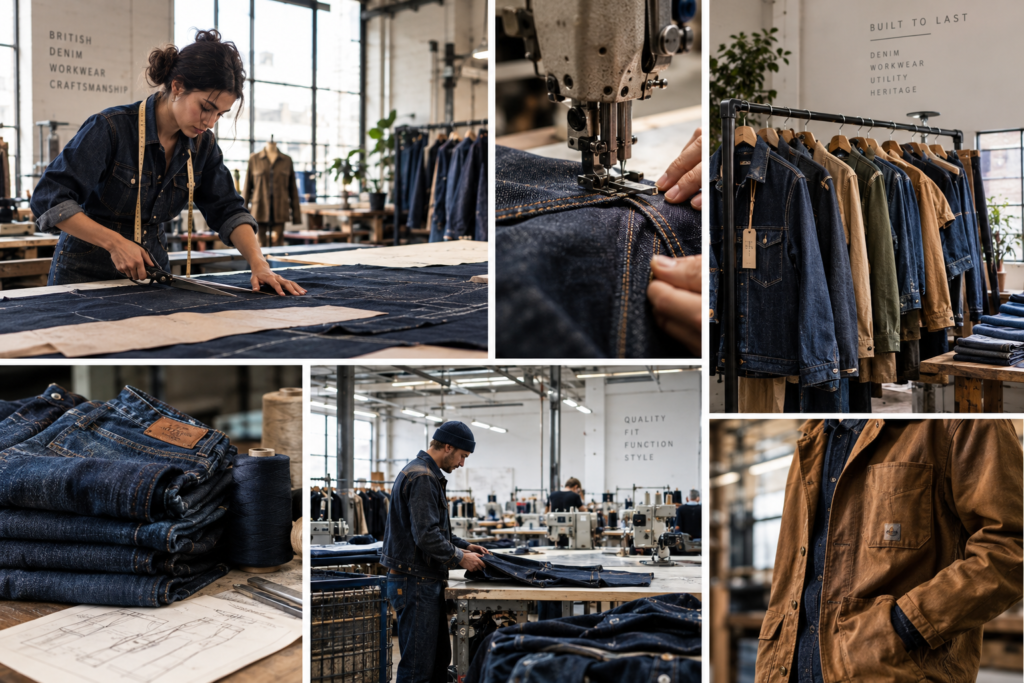
Denim garments require industrial sewing machinery capable of handling heavier fabrics, as well as expertise in construction, rivets, buttons, washes and finishing.
The UK also has manufacturers producing workwear, uniforms and technical garments, where durability and performance are often more important than fashion-led details.
These manufacturers can have completely different production requirements from a luxury womenswear studio.
Small Studios vs Large Factories
One of the biggest misconceptions about clothing manufacturing is that every manufacturer is a huge factory filled with hundreds of workers.
In reality, the UK has a diverse manufacturing landscape.
Some businesses are traditional factories with established production lines. Others are small workshops with a handful of highly skilled machinists. There are also sampling studios, pattern-cutting rooms, specialist knitwear producers and manufacturers that combine development, design and production under one roof.
For example, some London studios specifically work with emerging designers on samples and small production runs, while larger factories elsewhere in the UK can handle higher-volume CMT production.
This variety is one of the strengths of UK manufacturing.
Why Choose UK Manufacturing?
UK manufacturing isn’t usually the cheapest route.
The advantage is often control, communication, flexibility and specialist expertise.
For a new designer, being able to visit a studio, discuss a pattern with a machinist and physically inspect a sample can make a huge difference.
UK production can also work particularly well for brands experimenting with a new product, producing limited collections or testing demand before committing to larger quantities.
Recent research into UK domestic manufacturing found that brands commonly use British factories for smaller orders, quick turnaround, test-and-react production and specialised or personalised products rather than very large-volume orders.
And this is perhaps where UK manufacturing is most interesting today.
It doesn’t necessarily need to compete with huge overseas factories on volume.
Instead, British manufacturers can offer something different: craftsmanship, proximity, flexibility and specialist production.
Finding the Right Manufacturer
Ultimately, choosing a clothing manufacturer isn’t simply about searching for a “UK clothing manufacturer”.
It’s about finding the right manufacturer for your particular garment.
Making a silk blouse is different from making a bra.
Making a cashmere jumper is different from making a T-shirt.
Making a tailored coat is different from making leggings.
And producing 50 garments is a very different proposition from producing 5,000.
Before approaching a manufacturer, it’s worth understanding your product, fabric, quantities, sizes, finishing requirements and desired production timeline. You’ll also need to know whether you’re looking for sampling, CMT, full-package production or simply a factory to manufacture an already-developed product.
The UK has manufacturers and studios covering all of these areas — from lingerie and knitwear to shirts, jersey, denim, tailoring, outerwear and ready-to-wear.
The Future of UK Clothing Manufacturing
British clothing manufacturing may look very different from the mass-production model many people imagine when they hear the word “factory”.
Today, it is increasingly about specialist skills and smaller, more flexible production.
From a small London studio making the first samples for an emerging lingerie label, to a Scottish knitwear producer creating luxury cashmere, to a Leicester factory producing cut-and-sew garments at scale, there is a surprisingly diverse network of businesses keeping clothing production alive in the UK.
And behind every “Made in Britain” label is a story — not just about where the garment was made, but about who made it, what skills were involved and which specialist production process brought it to life.
That is what makes UK clothing manufacturing so fascinating: there isn’t one British factory making everything.
There is an entire ecosystem of specialists, each with their own craft.