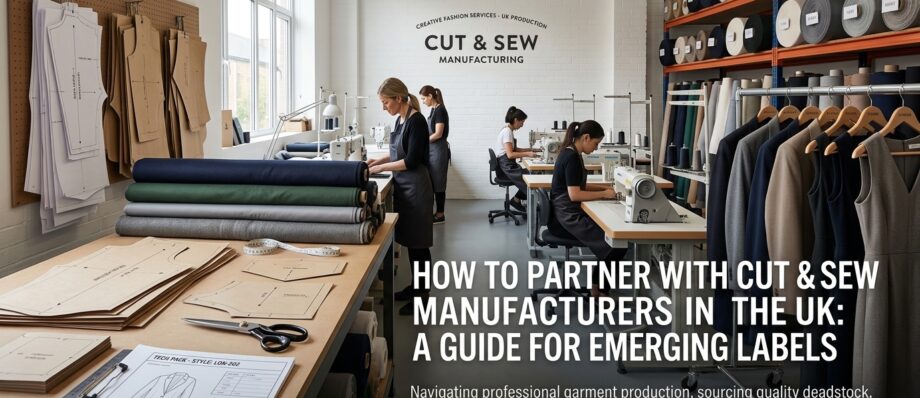
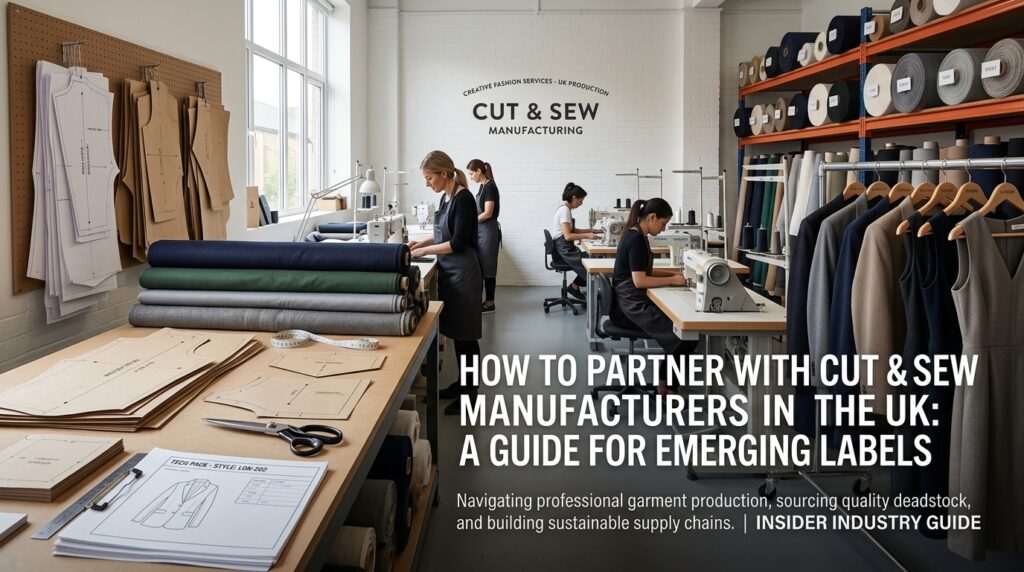
How to Partner with Cut and Sew Manufacturers in the UK: A Guide for Emerging Labels

- Bernice
- October 14, 2026
- clothing manufacturers, Fashion Business, Independent Designers
Navigating production can make or break an independent fashion brand. Learn how to successfully vet and partner with premium cut and sew manufacturers in the UK.
For an independent fashion brand transitioning from initial showpieces to scalable commercial production, choosing the right manufacturing path is the most critical operational milestone you will face. While offshore factories offer alluring price points at massive volumes, partnering with cut and sew manufacturers in the UK remains the gold standard for emerging luxury, contemporary, and sustainable labels prioritising premium quality assurance, rapid turnaround times, and ethical transparency.
However, entering the British manufacturing landscape requires a sharp, professional approach. UK factories operate on tight schedules and thin margins; they expect incoming designers to speak the language of the factory floor.
To ensure your collection moves seamlessly from pattern layout to final delivery, here is the industry-insider playbook for navigating UK apparel production.
1. Demystifying the Cut and Sew Process
In the commercial fashion industry, “cut and sew” distinguishes garment production from fully fashioned knitwear or pre-made blank customisation. A true cut and sew manufacturer takes your raw, flat fabric rolls, patterns, and construction guidelines, and executes the entire manufacturing lifecycle under one roof:
- Fabric Laying & Cutting: Fabric is systematically unrolled, relaxed to prevent shrinking, stacked in layers, and cut precisely using industrial fabric saws or automated laser cutters.
- Component Assembly: Skilled sample machinists handle the construction, utilising specialised overlockers, lockstitchers, or flat-locking machines tailored to your fabric composition.
- Finishing & Garment Processing: The pieces undergo industrial pressing, hardware application (such as zips, eyelets, or snaps), meticulous loose-thread trimming, and final quality assurance checkpoints.
2. What a UK Factory Expects from Your Brand
Before a premium British workshop will even offer you a production quote, you must present a professional package. If you approach a production manager with nothing but a mood board or a loose sketch, you risk being turned away or charged exorbitant consultation fees.
You must prepare a complete Tech Pack for every garment, containing:
- Detailed Technical Flat Drawings: Highly precise, digitised front and back illustrations showing exactly where topstitching, seams, and closures sit.
- A Full Bill of Materials (BOM): A detailed spreadsheet listing every single physical component required to complete the garment—including the primary fabric, lining, fusing, thread weights, zips, and brand labels.
- An Industry-Standard Master Pattern: Production-ready card templates or graded digital files (such as .DXF format). Ensure your patterns have clear grainlines, precise seam allowances, and aligned notch markings.
3. Navigating the Capital Barrier: The Sourcing Alternative
The single biggest hurdle independent designers encounter when approaching UK cut and sew manufacturers is the Minimum Order Quantity (MOQ). Because setting up an industrial production line requires significant time and labour, factories naturally favour large-scale orders.
Furthermore, purchasing raw, pristine fabric rolls directly from commercial textile mills usually requires buying minimum quantities of 50 to 100 metres per colourway. For a startup brand self-funding its first capsule, this upfront investment can completely drain your runway capital before a single item is sold.
The Insider Strategy: Capitalising on Deadstock Surplus
To circumvent high MOQs and massive upfront material expenses, savvy independent designers look directly to the luxury circular economy. Instead of buying brand-new, mass-produced yardage from overseas mills, you can source your sample and production fabrics from local surplus exchanges.
Whether you are looking for rare Italian silks, premium heavy cotton calicos, or high-performance technical nylons, utilising a local deadstock and equipment marketplace like Creative Fashion Services allows you to purchase premium, designer-grade leftover fabrics by the metre. This strategy solves two problems at once:
- It bypasses commercial mill minimums, allowing you to buy exactly what you need for your initial production runs.
- It gives your collection an authentic, marketable sustainability angle by rescuing luxury textiles from being incinerated or sent to landfill.
4. Crucial Questions to Ask a Potential Production Partner
When vetting UK manufacturers to handle your inventory, never rush the negotiation phase. Arrange a physical studio visit if possible, and ask these critical operational questions:
- “What are your minimum order requirements per style and size breakdown?”
- “Do you specialise in structured woven fabrics, fine silks, or heavy technical outerwear?” (Always match the factory’s machinery expertise to your garment types).
- “What are your estimated lead times for sampling cycles versus bulk production?”
The Path Forward
Building a thriving, scalable fashion business relies heavily on the strength of your supply chain. By approaching UK manufacturers with flawless tech packs and utilising smart, cost-effective fabric sourcing methods, you protect your cash flow and position your brand as a serious, professional player in the industry.
Ready to streamline your studio workflow? If you have premium fabric rolls, leftover trims, or industrial sewing machinery cluttering your workspace after your last collection, don’t let capital sit idle. List your surplus goods on our platform to clear out your studio, unlock fresh cash flow, and help the next generation of independent designers launch their collections sustainably.