
Types of Sewing Thread

- Bernice
- October 13, 2026
- clothing manufacturers, Independent Designers, UK Fashion Industry
When it comes to fashion, thread may seem like a small detail, but it plays a vital role in the construction, durability, and appearance of a garment. Choosing the right sewing thread can influence everything from seam strength and stretch to the overall finish of a finished piece.
With so many different threads available, understanding their characteristics and applications is essential for fashion designers, garment manufacturers, pattern cutters, machinists, and anyone working with textiles.
In this guide, we explore the main types of sewing thread used in the fashion industry, their properties, and where they are most commonly used.
Why Is Sewing Thread Important in Fashion?
Sewing thread does much more than simply hold pieces of fabric together. The correct thread needs to work in harmony with the fabric, sewing machine, stitch type, and intended use of the garment.
Using an unsuitable thread can result in problems such as broken seams, puckering, skipped stitches, colour inconsistencies, or poor garment durability.
When selecting a thread, fashion professionals typically consider:
- Fibre content – what the thread is made from
- Thread weight and thickness – how fine or heavy the thread is
- Strength – how much tension the thread can withstand
- Stretch and elasticity – particularly important for knitwear and stretch fabrics
- Appearance – including sheen, texture, and colour
- Resistance – such as resistance to abrasion, heat, chemicals, or washing
- End use – whether the garment is fashionwear, sportswear, workwear, lingerie, denim, or another category
1. Polyester Thread
Polyester thread is one of the most widely used threads in modern garment production. It is popular because it offers a good balance of strength, durability, flexibility, and affordability.
It has relatively low moisture absorption and performs well during repeated washing and everyday wear. Polyester thread is available in a wide range of colours and weights, making it suitable for everything from lightweight fashion garments to heavier products.
Common uses include:
- Dresses and skirts
- Shirts and blouses
- Trousers
- Jackets
- Sportswear
- General garment construction
For many fashion manufacturers, polyester is a practical all-purpose sewing thread.
2. Cotton Thread
Cotton thread is made from natural cotton fibres and has traditionally been used in clothing construction. It has a softer, more natural feel than many synthetic threads and can be particularly suitable for natural-fibre garments.
Cotton thread is valued for its smooth appearance and ability to withstand ironing temperatures. However, it generally has less elasticity and abrasion resistance than polyester.
Common uses include:
- Cotton garments
- Quilting and patchwork
- Lightweight woven fabrics
- Vintage-inspired clothing
- Natural-fibre fashion products
Cotton thread can be an excellent choice where the properties of the thread need to complement a natural-fibre fabric.
3. Cotton-Wrapped Polyester Thread
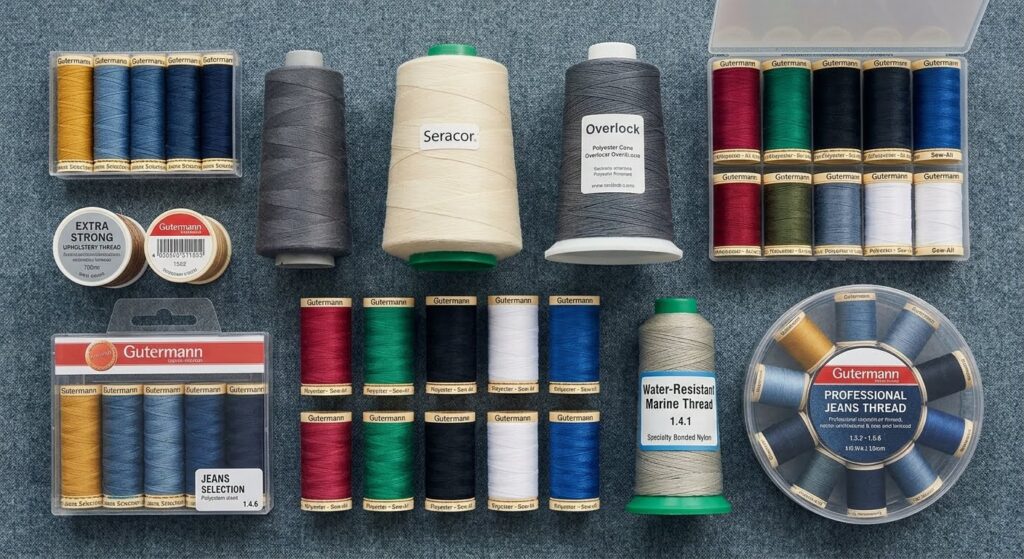
Cotton-wrapped polyester thread combines a polyester core with a cotton covering. This construction aims to provide the strength and durability of polyester while retaining some of the sewing characteristics and appearance associated with cotton.
It has historically been popular in garment manufacturing and can be useful for woven fabrics and general-purpose sewing.
Common uses include:
- Shirts
- Dresses
- Trousers
- General apparel production
- Quilting and craft applications
4. Nylon Thread
Nylon thread is a strong synthetic thread known for its durability and resistance to abrasion. Depending on its construction, nylon can also offer a degree of elasticity.
It is often used where strength and flexibility are particularly important.
Common uses include:
- Sportswear
- Lingerie
- Swimwear
- Stretch garments
- Outdoor apparel
- Heavy-duty applications
Clear nylon thread is also available and can be used in certain applications where a visible thread colour is undesirable, although its suitability depends on the fabric and construction method.
5. Rayon Thread
Rayon thread is particularly valued in fashion for its attractive appearance. It has a smooth surface and distinctive sheen, making it popular for decorative stitching and embroidery.
Unlike polyester, rayon is generally chosen more for its visual qualities than for maximum durability.
Common uses include:
- Decorative stitching
- Embroidery
- Logos and motifs
- Fashion detailing
- Decorative topstitching
For garments where stitching is intended to become a visible design feature, rayon can provide an elegant finish.
6. Silk Thread
Silk thread is made from natural silk fibres and is prized for its smoothness, fine appearance, and luxurious quality.
It can be particularly useful when working with delicate or expensive fabrics because it can create relatively fine, discreet seams without overwhelming the material.
Common uses include:
- Couture garments
- Luxury fashion
- Silk fabrics
- Delicate fabrics
- Tailoring
- Hand sewing
Silk thread is often associated with high-end fashion because of its refined appearance and suitability for specialist sewing applications.
7. Wool Thread
Wool thread is less common for everyday garment construction but has specialist uses within fashion and textiles. Its thicker, softer characteristics can make it suitable for decorative stitching, embroidery, and certain traditional textile techniques.
Common uses include:
- Decorative stitching
- Embroidery
- Wool garments
- Craft applications
- Traditional textile work
8. Metallic Thread
Metallic thread is designed primarily for decorative purposes. It can contain metallic fibres or a metallic-looking outer layer and is available in finishes such as gold, silver, bronze, and other colours.
Metallic thread can add visual interest and a premium or theatrical effect to a garment.
Common uses include:
- Embroidery
- Couture
- Eveningwear
- Occasionwear
- Decorative topstitching
- Fashion embellishment
Because metallic threads can be more challenging to sew with, appropriate machine settings and needles are important.
9. Overlocking and Serger Thread
Overlocking thread is generally fine and is designed to run efficiently through the multiple thread paths of an overlocker or serger.
Overlockers are widely used in garment production to neaten raw fabric edges while simultaneously creating or strengthening seams.
The thread used can be polyester or another suitable fibre, depending on the application.
Common uses include:
- Knitwear
- T-shirts
- Jersey garments
- Dresses
- Sportswear
- General garment finishing
The correct thread weight is particularly important because an overlocker may use several cones of thread simultaneously.
10. Stretch Thread
Stretch thread is designed for fabrics that require additional elasticity. It can be particularly useful for garments made from knitted or elastane-containing fabrics.
The ability of the thread to stretch with the fabric helps reduce the risk of seams breaking when a garment is pulled or extended.
Common uses include:
- Activewear
- Swimwear
- Lingerie
- Leggings
- Stretch jersey
- Body-conscious garments
However, thread choice should always be considered alongside the stitch type and sewing machine settings. A suitable stretch stitch or overlocking stitch may also be necessary.
11. Topstitching Thread
Topstitching thread is generally heavier than standard construction thread and is designed to create a visible, decorative line of stitching.
It is particularly associated with denim and workwear, where prominent stitching can become an important part of the garment’s aesthetic.
Common uses include:
- Jeans
- Denim jackets
- Workwear
- Coats
- Bags
- Decorative garment details
The contrast between the thread and fabric can be used intentionally as part of a garment’s design.
How Do You Choose the Right Sewing Thread?
There isn’t one thread that is perfect for every fashion application. The best choice depends on the fabric, construction method, garment function, and desired appearance.
A useful starting point is to consider the following:
Match the Thread to the Fabric
The thread should be appropriate for the weight and construction of the fabric. A very heavy thread may damage a lightweight fabric, while a very fine thread may not provide enough strength for a heavyweight material.
Consider Stretch
For stretch fabrics, the thread needs to accommodate the movement of the garment. Stretch or appropriately constructed synthetic threads may be preferable to a rigid thread.
Think About the Garment’s End Use
A garment designed for everyday wear may require a thread that can withstand frequent washing and abrasion. Couture or decorative garments may place greater emphasis on appearance and specialist finishing.
Consider Colour
For standard construction, thread is often selected to blend closely with the fabric. However, contrast stitching can also be used deliberately as a design feature.
Choose the Correct Thread Weight
Thread comes in different thicknesses. Fine threads are generally more appropriate for delicate fabrics, while heavier threads can be used for denim, outerwear, decorative stitching, and other robust applications.
Sewing Thread in Modern Fashion
As the fashion industry continues to evolve, thread selection is becoming increasingly connected to wider considerations such as sustainability, production efficiency, garment longevity, and recycling.
Manufacturers and designers may consider not only how a thread performs during construction but also what happens to the garment at the end of its life.
For example, the choice between natural and synthetic fibres can affect manufacturing performance, durability, care requirements, and potential recycling processes. These considerations are becoming increasingly relevant as the fashion industry explores more circular approaches to garment production.
Final Thoughts
Sewing thread may be a relatively small component of a garment, but its impact on quality, durability, comfort, and appearance is significant.
From versatile polyester thread and traditional cotton thread to luxurious silk, decorative rayon and metallic threads, and specialist stretch threads, each type has properties that make it suitable for different fashion applications.
For designers and manufacturers, understanding these differences makes it easier to select the right thread for each fabric and construction technique – and ultimately helps produce garments that look better, perform better, and last longer.
The right thread isn’t just about holding a garment together; it’s part of the craftsmanship behind the garment itself.