
A Guide to Knitwear Types: Understanding Stitch, Texture, Pattern & Luxury Fibres

- Bernice
- October 6, 2026
- clothing manufacturers, Independent Designers, UK Fashion Industry
Knitwear’s character comes from three essential elements: stitch and texture, colourwork, and fibre. Together, they determine how a garment looks, feels and perform – from the structure of Milano stitch and the warmth of cable knit to the intricate detail of Fair Isle and the softness of cashmere.
This guide explores the key stitch and texture techniques, introduces classic colourwork patterns, and explains the qualities of fibres including Merino, cashmere, lambswool, alpaca and mohair.
Why the Stitch Makes All the Difference – knitwear types
When it comes to knitwear, the stitch is often what gives a garment its personality. A simple change in the way yarn is knitted can transform a lightweight, delicate piece into something chunky and cosy, or turn a relaxed sweater into a structured, polished layer.
One of the most familiar examples is rib knit. Created by alternating knit and purl stitches, ribbing forms those distinctive vertical ridges that give the fabric plenty of natural stretch. This makes it a favourite for cuffs, collars and waistbands, but ribbed knitwear can also be used across an entire garment for a flattering, close-fitting silhouette.
Then there is cable knit, perhaps one of the most recognisable textures in traditional knitwear. The raised, rope-like patterns are created by crossing stitches over one another, producing a beautiful three-dimensional effect. Cables don’t just look cosy—they also add substance and warmth, making them a perennial favourite during the colder months.
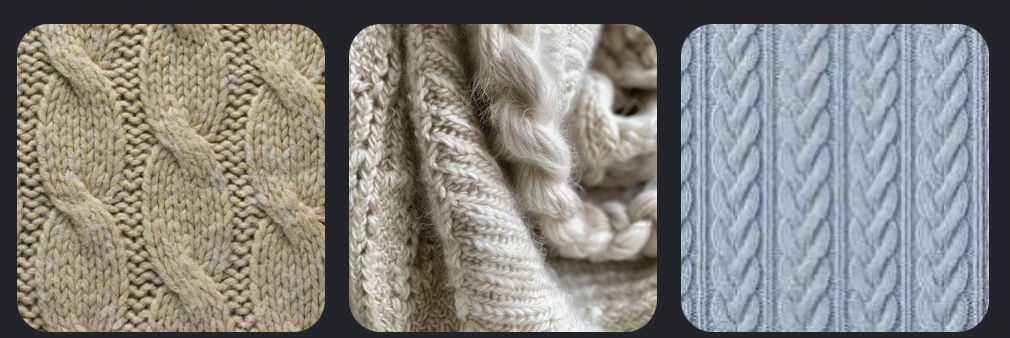
Cable knit
For something softer and more delicate, pointelle knit offers a completely different aesthetic. Small geometric openings are incorporated into the knit to create an almost lace-like effect. Lightweight and feminine, pointelle works particularly well for transitional dressing, whether worn as a delicate cardigan over a camisole or as a fine sweater on its own.
At the other end of the textural spectrum is waffle or honeycomb knit. As the name suggests, this construction creates a raised grid across the fabric, giving the garment a wonderfully tactile, three-dimensional surface. It is particularly appealing in relaxed sweaters and cardigans, where texture becomes the main design feature.
And for those who love a little more softness and character, bouclé knit brings an almost cloud-like quality to knitwear. Made using a looped yarn, bouclé has a naturally bumpy, fuzzy appearance that catches the light and gives even a simple silhouette plenty of visual interest.
When Knitwear Meets Tailoring
Not all knitwear is designed to be soft and relaxed. Some constructions are deliberately engineered to provide structure, stability and a more tailored appearance.
Milano stitch is a perfect example. This dense, double-knit construction creates a smooth, stable fabric that holds its shape beautifully. The result is knitwear with a sophisticated, almost tailored quality- ideal for knitted blazers, trousers, skirts and structured dresses.
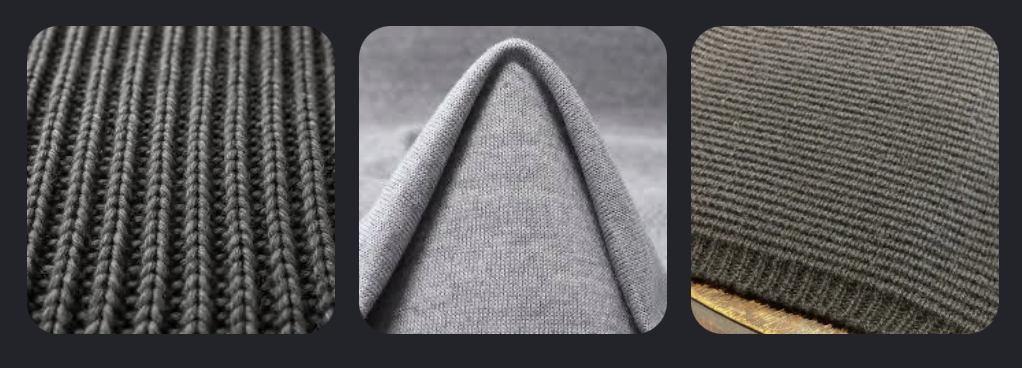
Milano stitch
It is one of the reasons modern knitwear has moved so far beyond the traditional jumper. Today, a well-designed knitted blazer can sit comfortably alongside a tailored jacket in a wardrobe, offering the same polished appearance with the added comfort and flexibility of knit.
When Colour Becomes the Design
Texture isn’t the only way to make knitwear distinctive. Colourwork can completely transform a garment, turning an everyday sweater into something much more expressive.
Few techniques have the heritage of Fair Isle. Originating from the Scottish island of the same name, the technique is recognised for its intricate bands of repeating geometric motifs. Traditionally, only a small number of colours are used, often two colours within a single row, creating the distinctive patterned effect associated with traditional winter knitwear.
Fair Isle has an unmistakable heritage appeal, but it can also feel surprisingly modern. Designers can play with scale, colour combinations and placement, taking a traditional technique and giving it a contemporary personality.
Argyle, meanwhile, is instantly recognisable through its diamond motifs and intersecting diagonal lines. Deeply connected with British heritage dressing, argyle has traditionally appeared on sweaters, sweater vests and socks. Today, the pattern can be found everywhere from classic neutral knitwear to bold, fashion-forward interpretations.
For something more graphic, intarsia allows knitwear to become almost like a canvas. Rather than creating small repeating motifs, intarsia is used to build larger areas of colour—think oversized diamonds, geometric blocks, initials, illustrations or graphic designs.
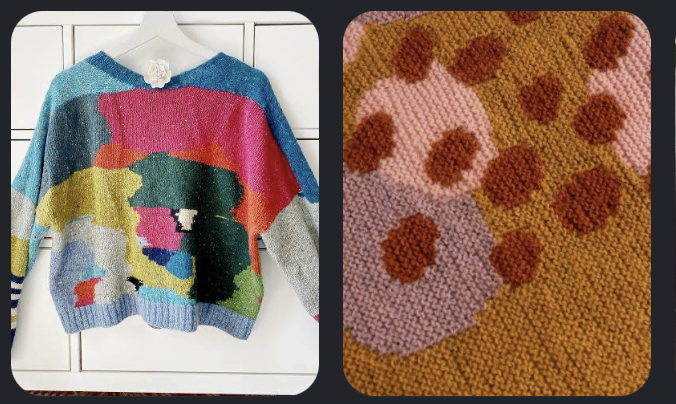
Intarsia knitwear
This makes it particularly exciting for statement knitwear. A beautifully executed intarsia sweater can feel less like a basic wardrobe item and more like a piece of wearable artwork.
Then there is melange, or marled knitwear, which takes a subtler approach. Two or more different coloured yarns are twisted together before being knitted, creating a softly blended, speckled or heathered appearance. The result is understated but full of depth, allowing even a simple sweater to have a richer visual texture.
The Luxury of the Yarn
Of course, the stitch is only part of the story. The fibre used to create the yarn can completely change the experience of wearing a knitted garment.
This is where fibres such as Merino, cashmere and lambswool come into their own.
Merino: Fine, Soft and Versatile
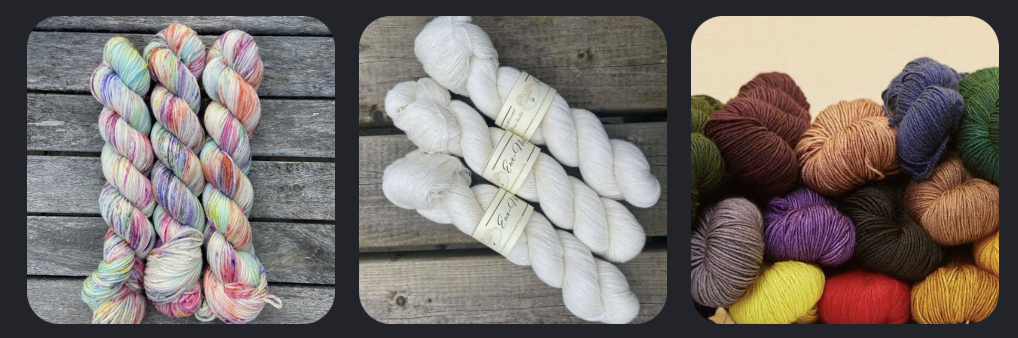
Merino yarn
Merino wool has become a favourite for modern knitwear because it offers a combination of softness, warmth and breathability.
Its fibres are considerably finer than traditional wool, making fine Merino particularly comfortable against the skin. It can be knitted into lightweight layers for transitional seasons or used in thicker constructions for winter.
A Merino sweater can therefore be incredibly versatile: easy to layer, comfortable enough for everyday wear and sophisticated enough to become a wardrobe staple.
Cashmere: The Ultimate Luxury
Few words are as closely associated with luxury knitwear as cashmere.
Taken from the soft undercoat of cashmere goats, cashmere is prized for its exceptional softness and warmth relative to its weight. A beautifully made cashmere sweater can feel incredibly light while providing remarkable insulation.
Part of the appeal of cashmere is its understated elegance. A classic cashmere crew neck or cardigan doesn’t necessarily need an elaborate stitch or dramatic pattern—the quality of the fibre itself becomes the feature.
For this reason, cashmere is often associated with timeless investment pieces: garments designed to be worn repeatedly and appreciated for years.
Lambswool: Traditional Comfort
Lambswool offers another wonderfully soft option. Taken from a young sheep’s first shearing, it has a naturally soft handle and excellent warmth.
It is particularly well suited to traditional winter knitwear, making it a natural partner for cable stitches, Fair Isle patterns and heritage-inspired designs.
A lambswool sweater can therefore capture that quintessentially cosy feeling while still feeling refined and luxurious.
Alpaca and Mohair: Lightness and Texture
For something with a little more visual drama, alpaca and mohair are both worth knowing.
Alpaca is known for its softness, warmth and lightweight feel, while mohair is instantly recognisable for its fluffy halo and subtle sheen. Both can introduce a beautiful sense of softness and movement to a garment.
They are often blended with other fibres, allowing designers to balance texture, durability, warmth and handle.
It’s All About the Combination
What makes exceptional knitwear so interesting is that these elements don’t exist in isolation.
A garment might combine a fine Merino yarn with a rib structure to create a sleek, fitted silhouette. A lambswool cable knit might use its chunky texture to emphasise warmth and heritage. A cashmere cardigan might rely on a simple, elegant stitch so that the softness of the fibre remains the focus.
Or a designer might take a traditional Fair Isle pattern and reinterpret it in unexpected colours, creating something that feels both nostalgic and contemporary.
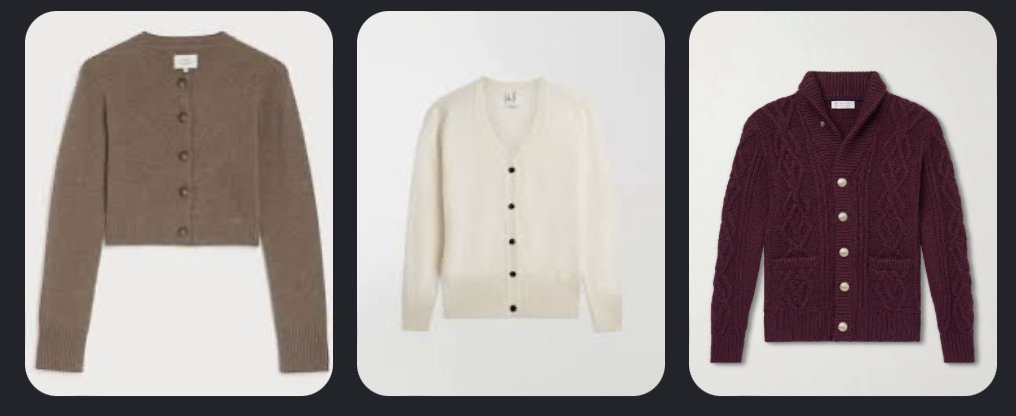
Cashmere cardigans
This is where knitwear becomes much more than simply something to keep warm in. The choice of fibre, stitch and colourwork can communicate an entire mood.
A chunky cable knit feels comforting and traditional. Fine ribbing can feel sleek and sophisticated. Pointelle has a romantic delicacy, while bouclé feels tactile and playful. Milano stitch feels polished and tailored, while bold intarsia can be expressive and artistic.
How to Choose the Right Knit
When choosing knitwear, it can be useful to think beyond colour and silhouette and consider how the garment has actually been made.
If you’re looking for something close-fitting and versatile, rib knit is an excellent choice. If warmth and texture are the priority, cable or waffle knit can provide plenty of visual and physical substance.
For lightweight layering, pointelle and fine-gauge Merino can be ideal. For a luxurious everyday staple, cashmere is difficult to beat. And if you’re looking for a more structured piece that can take you from casual to polished, Milano stitch is worth seeking out.
The fibre is equally important. Wool and lambswool are naturally suited to colder weather, Merino offers versatility and breathability, while cashmere brings softness and luxury. Alpaca and mohair introduce distinctive texture and a lighter, more tactile finish.
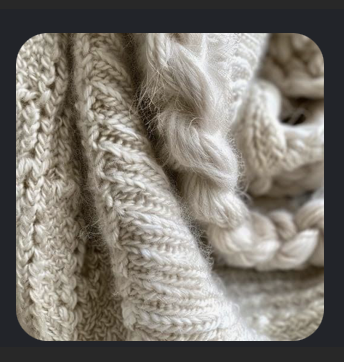
The Beauty of Knitwear
Perhaps the most exciting thing about knitwear is its versatility.
It can be traditional or contemporary, delicate or chunky, relaxed or tailored, understated or incredibly bold. The same basic material—yarn—can be transformed into countless different fabrics simply through the combination of stitch, technique, colour and fibre.
So next time you pick up a knitted sweater, take a closer look. Notice the texture beneath your fingertips. Look at how the stitches have been constructed. Consider the yarn and the way the colours have been combined.
Because behind every beautiful piece of knitwear is a combination of decisions—and understanding those details makes you appreciate just how much craft and creativity goes into creating something as seemingly simple as a sweater.
From the timeless appeal of Merino and lambswool to the indulgence of cashmere, and from classic Fair Isle and cable knit to modern intarsia and Milano stitch, knitwear continues to evolve while retaining the craftsmanship and comfort that have made it a wardrobe essential for generations.